A Concise History of Long-nying Chöling Monastery
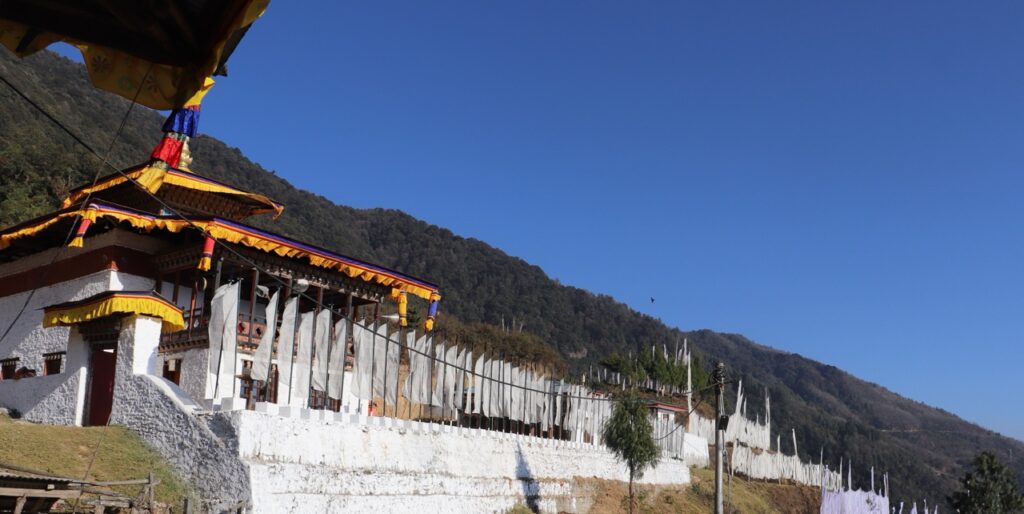
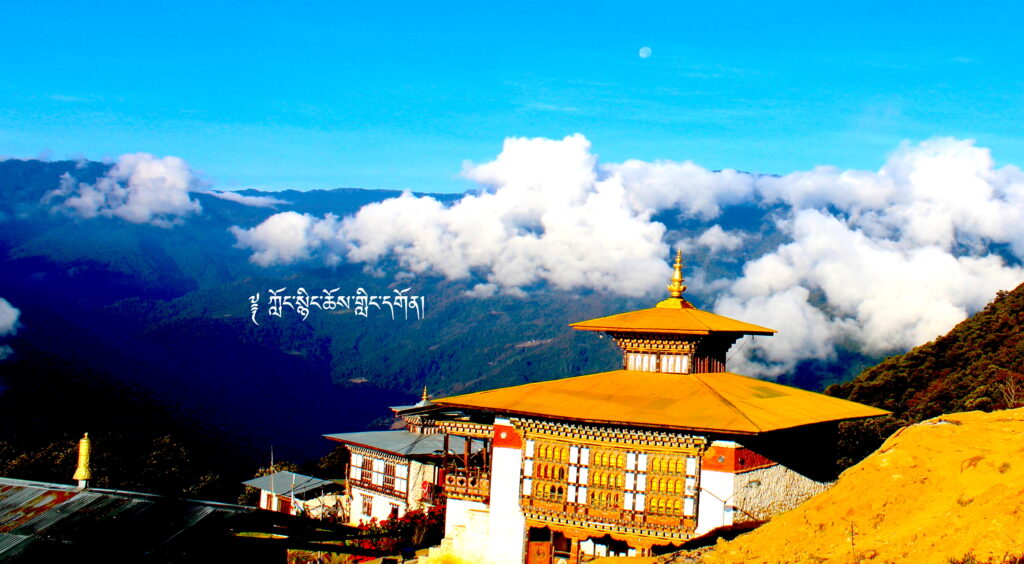
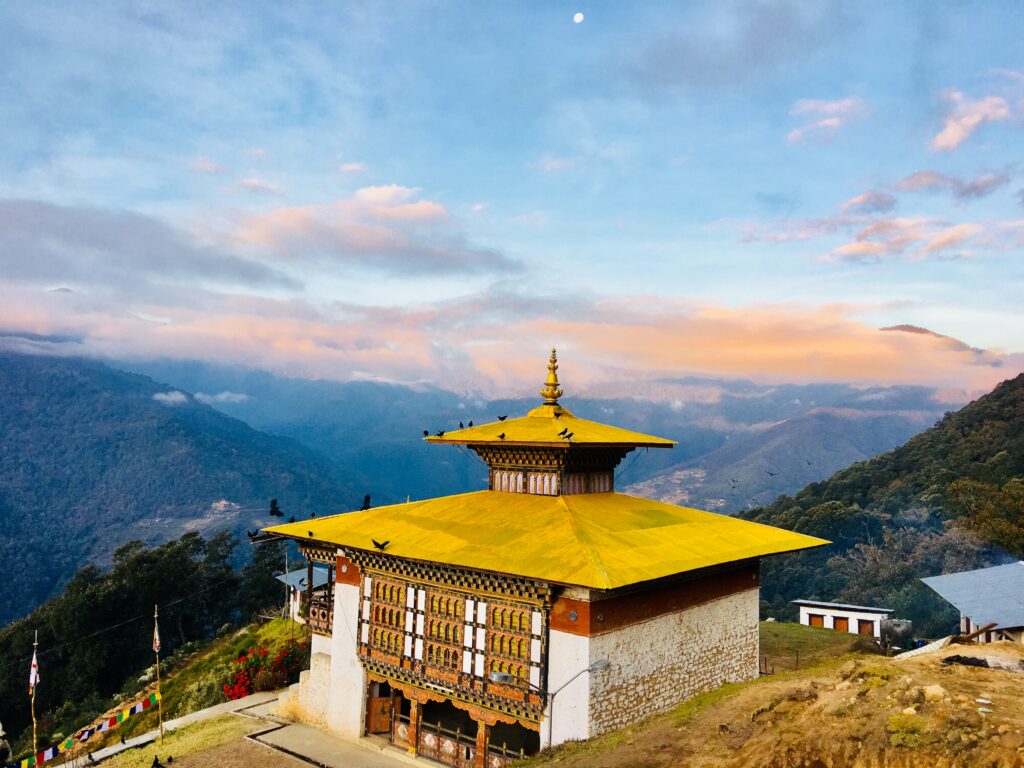
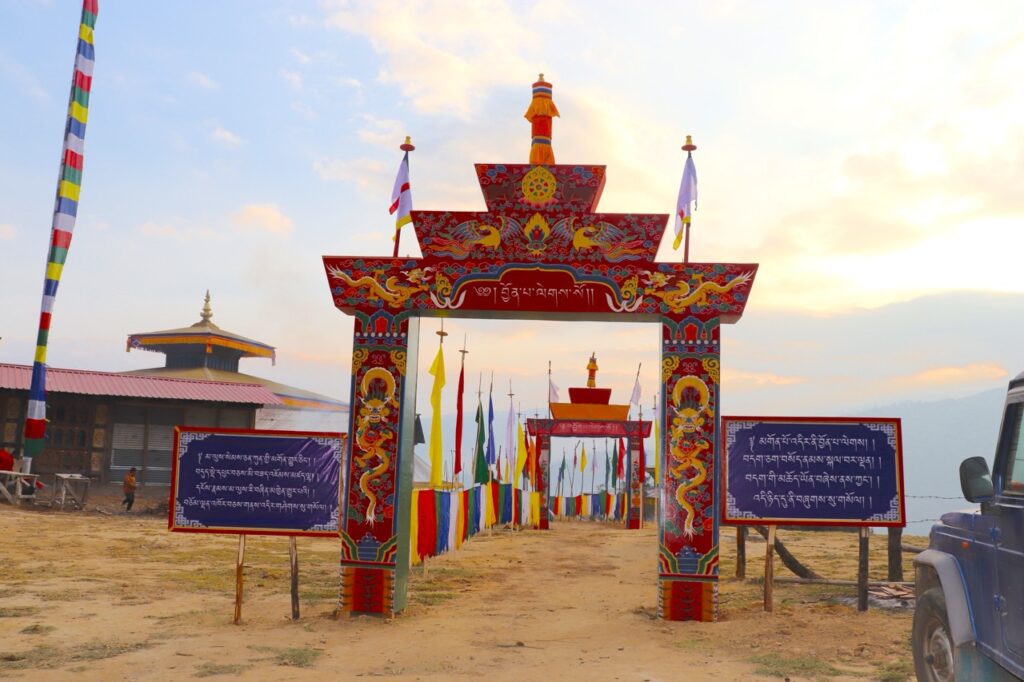
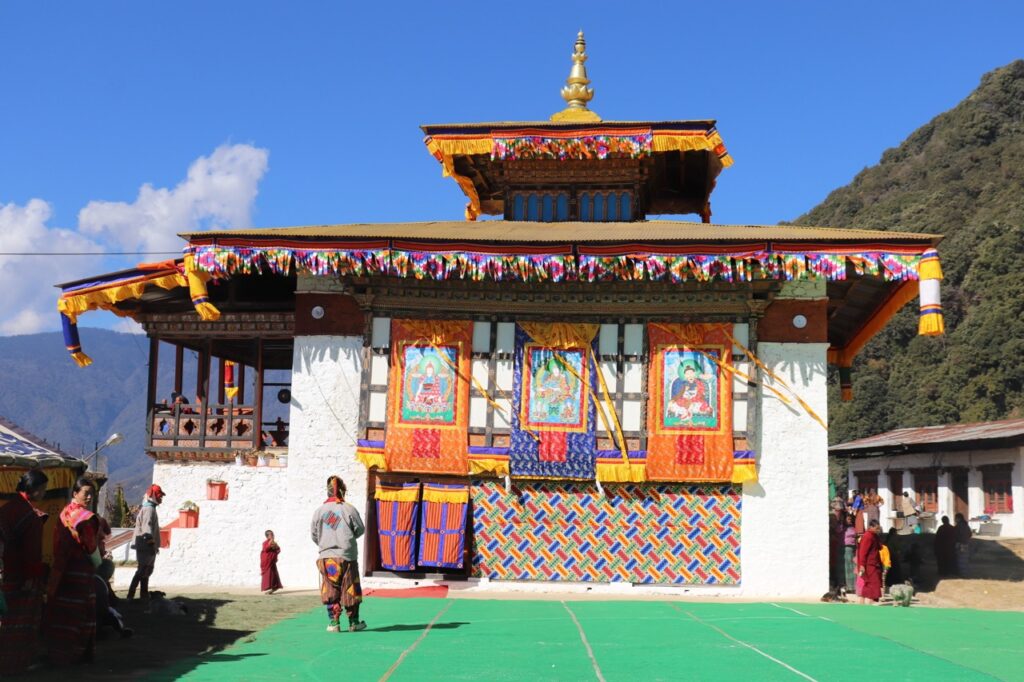
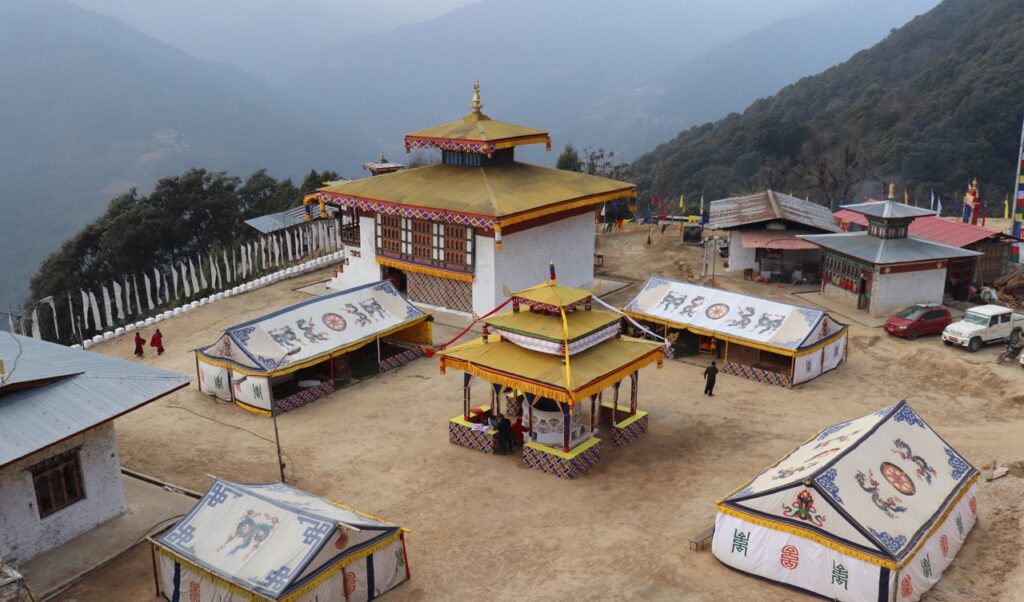
Long-nying Chöling Monastery is situated above the historic village of Longkhar Chakidemig, on the slope of Blongla Mountain in Khamdhang Gewog, Trashiyangtse District, Eastern Bhutan. The monastery rests in a distinctive landscape traditionally described as resembling a yogi seated in lotus posture. Trashiyangtse is known as the “pinnacle of auspiciousness” among the eastern districts of Bhutan, while Bhutan itself is celebrated as a land of medicinal herbs and sacred Dharma.
Behind Blongla Mountain, toward Yangtse, lies the hidden sacred site of Guru Padmasambhava known as Tsangpochen Ney. From this sacred place flows the Blarkang stream, passing through remarkable rock formations and cliffs marked, according to oral history, by signs of Guru Padmasambhava’s miraculous activities. In ancient times, this area was home to an old monastery known as Gonpa Manma, meaning “the old monastery.” Although the exact origin and founder of Gonpa Manma are unknown, the site later became a renowned hermitage where yogis practiced for many generations.
The sacredness of this region is recorded in ancient guidebooks to holy places, known in Tibetan as neyig, and is also reflected in texts petitioning the local guardian deity Blogong Lhatsen, who is said to dwell in Blogongla Mountain and to have been bound under oath by Guru Padmasambhava. This account is also mentioned in Seeds of Faith, a guidebook to Bhutan’s sacred sites by the well-known Bhutanese author Kunzang Thinley, published by KMT.
The monastery is surrounded by many important sacred sites. These include Ombha, often known as the “Tiger’s Nest of Eastern Bhutan,” as well as Gongja and Gomphukora, located toward the lower part of the mountain. These sacred places are traditionally regarded as belonging to the lower regions of Pema Ling, the “king of sacred sites” in Eastern Bhutan. The Crystal Cave Chronicle of Guru Padmasambhava (Kathang Sheldrakma), revealed by the treasure revealer Orgyen Lingpa (1323–c. 1360), identifies five regions, one sanctuary, and twenty-one sacred mountain ranges as Guru Padmasambhava’s hidden lands, among which Pema Ling is recognized as one of the sanctuaries.
About a mile above the present monastery are large ruins now covered by earth and dense forest. According to oral history, these remains are believed to belong to an ancient monastery or fortress, possibly dating back to the time of the Tibetan prince Tsangma in the ninth century. Because of its protected location, fresh water, sweeping views, forests, wild vegetables, and fruits, this area has long been considered an ideal place for retreat and Dharma practice.
Another sign of the sacred character of this land is the presence of several sites associated with Masang along the trail north of Longkhar village. Masangs are generally remembered as proto-historical beings. In this region, they are said to have been born from a human mother and a spirit father, and are regarded as emanations of Guru Padmasambhava or enlightened beings who helped sentient beings and subdued harmful forces.
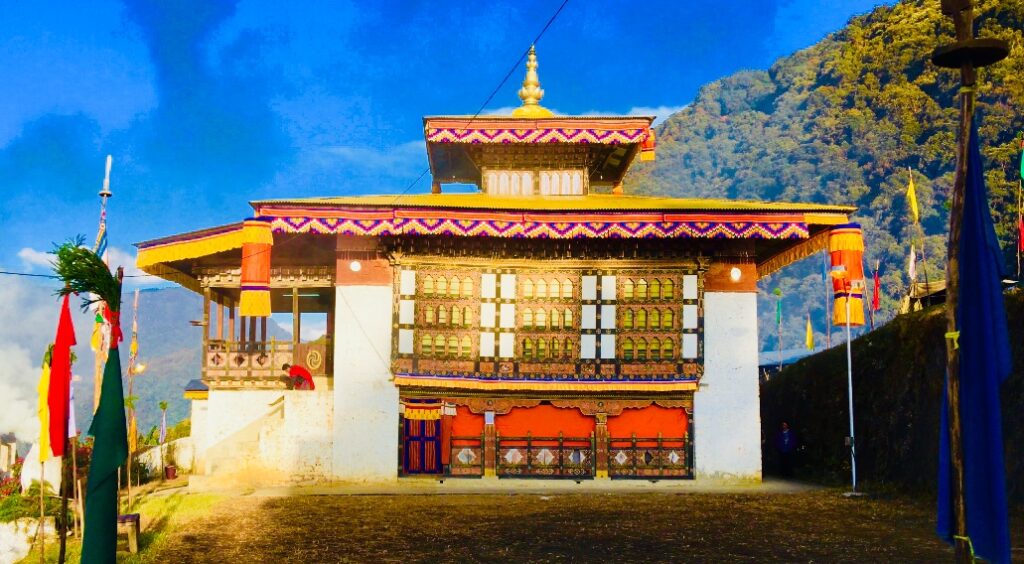
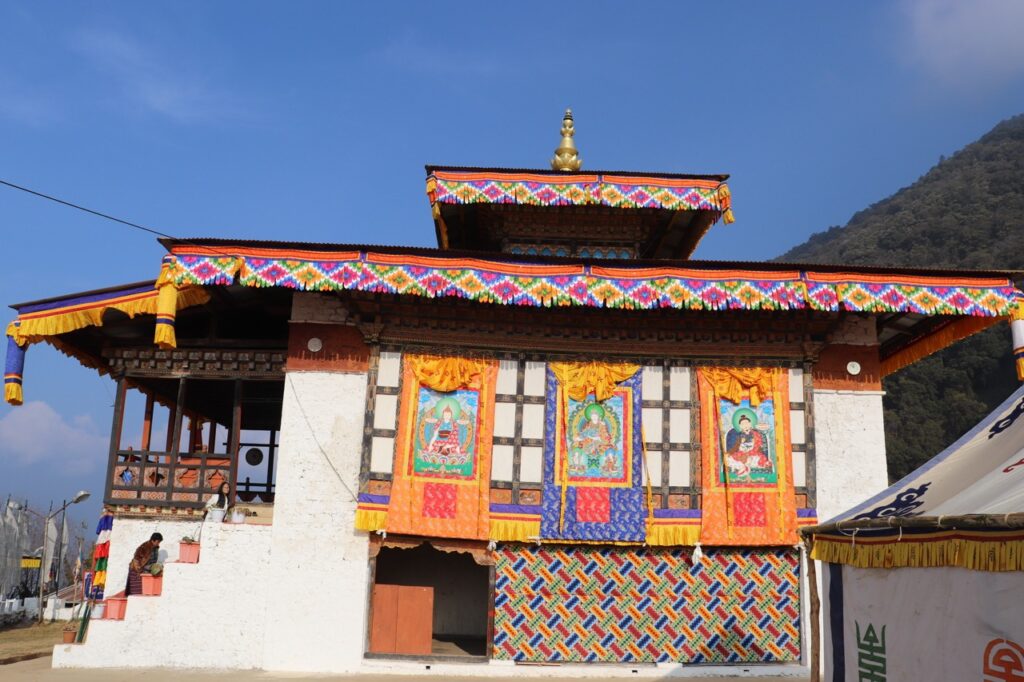
The present Long-nying Chöling Monastery was established in 1906, the Fire Horse year of the fifteenth Rabjung cycle, by the Longchen Nyingtik yogi Pema Drakpa, in accordance with prophecy. According to oral history, the earlier Gonpa Manma of Tsangpochen, located behind Blongla Mountain, was moved to the present location. Doors, windows, and other wooden materials from the ancient monastery were carried to the new site. Because the old beams and pillars were very heavy, they were reduced in size to make transportation possible and were used again in the construction of the monastery.
Yogi Pema Drakpa is said to have been born in Zhokpadung, or Mugpakhar, in Kurtoe, Lhuntse District. He was the elder brother of Mugpakhar Memey Lopön Kelzang Chöpel Rinpoche, a disciple of Tokden Shakya Shri (1853–1919), the great Mahāmudrā and Dzogchen master. Lama Kelzang Chöpel was also the uncle of the mother and grandfather of the present Buli Trulku.
From a young age, Yogi Pema Drakpa sought deep spiritual realization. He traveled to Tibet, where he studied extensively under renowned Nyingma masters such as Jamyang Khyentse Wangpo, Nesarpa Jamyang Tenphel, and other distinguished Dzogchen masters. After returning to Bhutan, he lived as a wandering yogi, practicing in different places without fixed residence.
During his travels, he came to Longkhar village, where he was hosted by a local landlord named Chokdar and his wife, Rinchen Lhamo. They requested him to establish a monastery and serve as the head lama for the benefit of the local community. Recognizing this as the fulfillment of Guru Padmasambhava’s prophecy and as an opportunity to benefit beings, Yogi Pema Drakpa accepted their request.
With the support of the local community, a two-story monastery was built. Life-sized statues of Śākyamuni Buddha, Guru Padmasambhava, Amitābha, Amitāyus, Avalokiteśvara, Vasudhārā, and White Tārā were installed as supports of devotion, merit, and blessing. During the consecration ceremony, many auspicious signs appeared.
The monastery was then named as Long-nying Chöling, meaning “the Abode of the Heart Essence of the Vast Expanse,” referring to the Longchen Nyingtik cycle of teachings and practices revealed as a mind treasure by the omniscient Jigme Lingpa. Yogi Pema Drakpa also appointed Gyalpo (King) Pehar as the Dharma protector of the monastery, following the example of Guru Padmasambhava’s appointment of Pehar as protector after the establishment of Samye Monastery in Tibet.
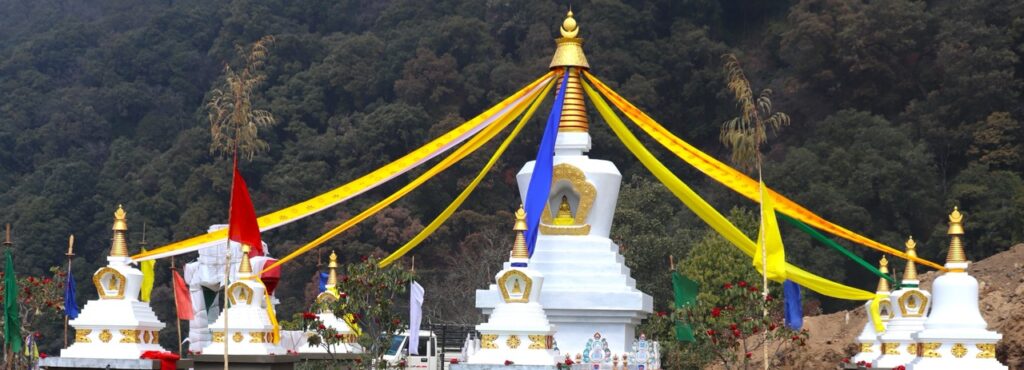
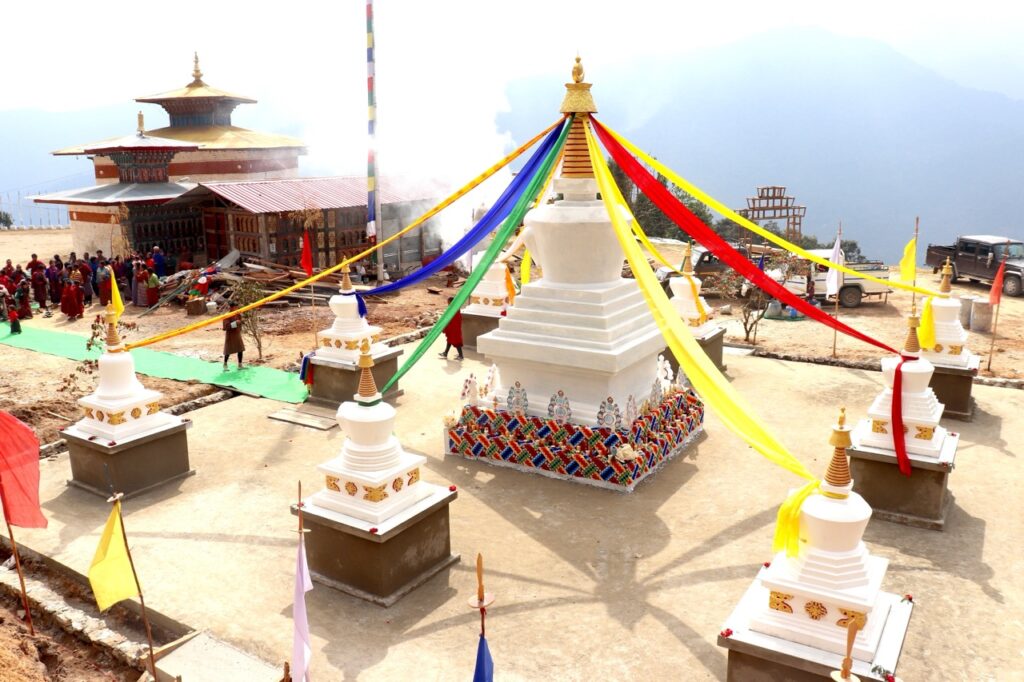
Under Yogi Pema Drakpa’s direction, a twelve-volume set of the Prajñāpāramitā Sūtra was brought from Lhasa and enshrined in the temple as a support of enlightened speech. A stupa of enlightenment was also built by the roadside in the lower part of the village as a support of enlightened mind for the region. Although deeply revered by the local people, Yogi Pema Drakpa remained true to the way of the yogis. He eventually passed away in seclusion, quietly and without public recognition, following the example of the great wandering practitioners of the past.
After him, many realized masters resided at and consecrated Long-nying Chöling Monastery. Over time, the monastery came to preserve numerous sacred relics and supports of enlightened body, speech, and mind, becoming a source of blessing for the surrounding communities.
The second abbot of Long-nying Chöling Monastery was Yogi Lama Phuntsok Dorji (1902–1985), the son of Zimgarpa Chagdor of Zhal-ngo Nagtsang. His family had connections with Kurtoe Dungkhar in Lhuntse and was related to the family of the First King of Bhutan. Yogi Lama Phuntsok Dorji entered the Dharma at a young age and studied under many masters, including Dzogchenpa Kunzang Dorji and Nesarpa Jamyang Tenphel. He later became the chief disciple of Siddha Chöying Rangdröl, a renowned Dzogchen master from Tibet who taught in the valleys of Trashiyangtse and Kurtoe.
Yogi Phuntsok Dorji traveled to Tibet with his guru and later returned to Bhutan, where he practiced as a wandering yogi, keeping a low profile in accordance with his guru’s advice. During a pilgrimage, he met his consort, a noblewoman from Longkhar and the paternal aunt of the fourth abbot, Lama Sonam Wangdi. After this he was invited to become the lama of Long-nying Chöling Monastery.
Yogi Phuntsok Dorji spent much of his life in strict retreat on Blongla Mountain above the monastery, overlooking the entire valley. He was revered as a highly realized and powerful yogi, known for clairvoyance and for protecting the region from destructive hailstorms and windstorms. During his retreat, Dharma practitioners gathered around him, including Yogi Lama Sonam Wangdi, who would later become the fourth abbot, and his son Yogi Lama Norbu Wangdi, who would become the fifth abbot. They practiced nearby in simple bamboo huts. Later, when Yogi Lama Phuntsok Dorji descended closer to the monastery, disciples again gathered around him and continued their retreat practices.
During the period when Yogi Lama Phuntsok Dorji remained in retreat on Blongla Mountain for nearly four years, the responsibilities of the monastery were temporarily carried out by Drupthop (Siddha) Jangchub Palzang, an incarnate lama renowned for clairvoyance and miraculous activities in Trashiyangtse and the Tawang region of Arunachal Pradesh, India. He lived as a mahāsiddha, benefiting the people of the region with his miraculous activities until he later departed for Tawang, India. During his time at the monastery, he discovered new sacred spring waters, which became an important source of drinking water for the community.
After Yogi Lama Phuntsok Dorji entered further seclusion, Yogi Lama Sonam Wangdi (1914–1990) became the fourth abbot of Long-nying Chöling Monastery. His ancestors belonged to the clan of the great treasure revealer (Terton) Guru Chöwang. Following him, his eldest son, Yogi Lama Norbu Wangdi (1944–2025), became the fifth abbot.
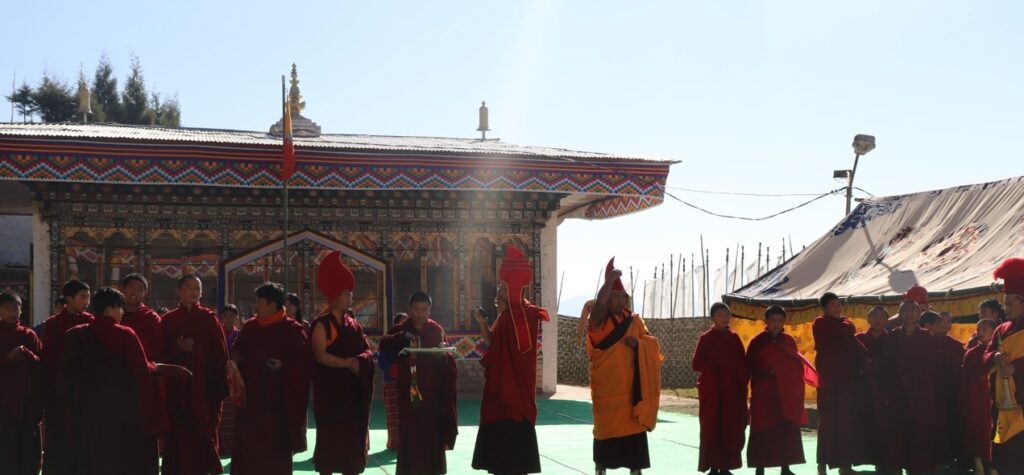
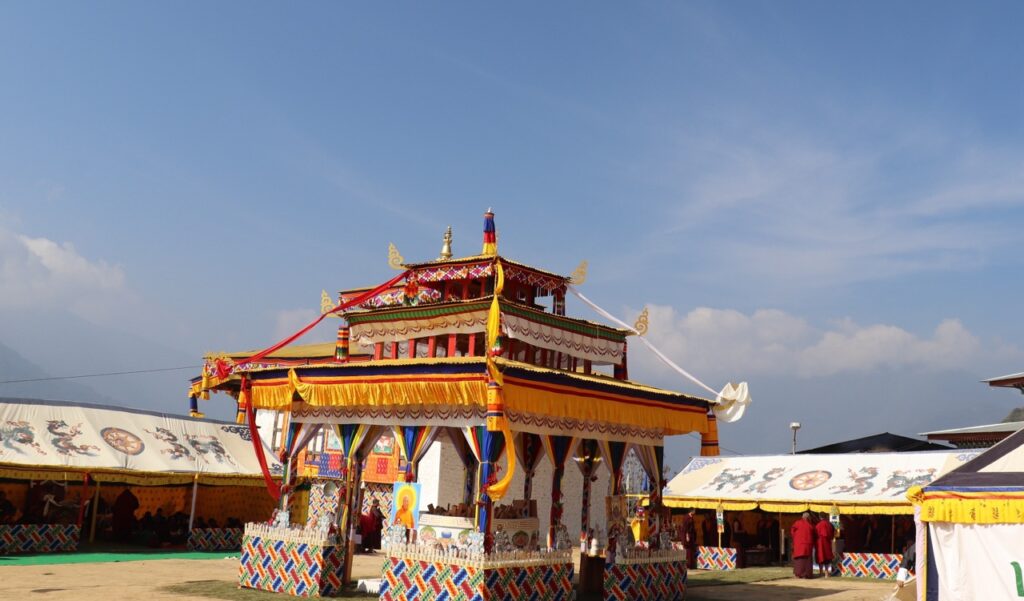
Ven. Yogi Lama Norbu Wangdi’s life and accomplishments are recorded in detail in his extensive biography. He studied under more than fifty masters, including His Holiness Dudjom Jigdral Yeshe Dorje, the recent regent of Guru Padmasambhava. During his tenure, he undertook the great responsibility of completely renovating the century-old Long-nying Chöling Monastery. He acquired new statues, commissioned mural paintings, and obtained sacred texts, including the Kangyur, the translated words of the Buddha, and the Tengyur, the translated treatises of the great masters. Beginning in 1987, he also established Drupchens, Drupchöds, the annual Tsechu festival, and many other ritual ceremonies that continue to serve the Dharma and the local community.
Ven. Lama Norbu Wangdi’s only son, Lama Dolma Wangdi, received rigorous Dharma training from childhood under his father and other masters, including the great yogi Lama Sonam Drupthop. He assisted with the management of the monastery for several years and completed a three-year retreat, but passed away suddenly soon afterward.
At present, Ven. Khentrul Namchak Dorji, the only grandson of Ven. Lama Norbu Wangdi and the son of the late Lama Dolma Wangdi, is the main successor of this sacred lineage. He is also regarded as the rebirth of the second abbot, Ven. Lama Phuntsok Dorji. His detailed biography is available separately. As the successor of Ven. Lama Rinpoche Norbu Wangdi, and as the founder and vice chairman of the Long-nying Chöling Foundation, registered under the Commission for Religious Organizations of Bhutan, Ven. Khentrul Namchak Dorji now carries the main responsibility for preserving and developing the monastery.
In recent years, especially as Ven. Lama Norbu Wangdi advanced in age, Ven. Khentrul Namchak Dorji has taken responsibility for major monastery projects, including the construction of a three-year retreat center, the establishment of a monk school, and the oversight of major religious events, renovations, and community activities. Through these efforts, Long-nying Chöling Monastery continues to serve as a living center of Longchen Nyingtik practice, Vajrayāna ritual tradition, retreat, study, and service to the people of Eastern Bhutan and beyond.